
The Danes Haven't Forgotten Greenland
And neither has anyone else

No, it’s not back to business and usual. And no, Denmark has not “gotten over” Greenland. Nor has anyone else.
I spent last week in Copenhagen, mostly working on a project that will appear later this year. But many of the people I met were still processing the events of January. Americans might have already forgotten that only two months ago, Donald Trump was openly threatening to invade the territory of one of America’s closest NATO allies. Denmark has cooperated with the US for decades in Greenland, at one point even allowing American nuclear weapons to be stored there. The Danes sent troops to Iraq and Afghanistan, invested billions of dollars in the United States and thought that Americans valued their relationship as much as they did. Greenlanders are Danish citizens who vote in Danish elections and cannot simply be handed over to the United States.
But last year, Trump began threatening not just to buy or annex Greenland, but to invade Greenland. Both because of what Trump was saying in public (for months he refused to take the military option “off the table”) and because of information they were getting through other means, the Danish government became convinced that this threat was real. Some of their allies in Europe were convinced as well.
Think about what this means: Denmark began preparing to go to war with the United States. Danish soldiers arrived in Greenland. European soldiers joined them, from France, Germany, Norway, Sweden, the Netherlands, Finland, and the UK. Officially they were there to exercise a fight against Russia or China, but everyone understood they also came to show solidarity with Denmark, just in case. The Greenlandic people started preparing as well. Ken Harbaugh, writing in the Atlantic, points out that this is a well-armed population, with more than 35,000 long rifles on an island of 56,000 people. Perhaps other preparations were made as well. Were anti-aircraft guns put in place? Cyber defenses?
The invasion did not happen. Trump ditched the idea in a long, rambling speech at Davos, where he confused Greenland and Iceland several times. But the post-traumatic stress in Copenhagen remains. Danes now download apps that can identify US products, so that they know not to buy them. A traditional Danish-American Fourth of July party, first held in 1912, may lose its local funding, or be cancelled. Several people asked me if Americans know how angry they are. I told them that no, probably most Americans do not know how angry they are. I think that made them angrier.
They aren’t alone. The European military and political leaders who suddenly, for a couple of nightmarish days, had to imagine how they might fight a war with their ally are unlikely to forget the experience anytime soon. Nor to they believe that Trump has dropped the subject of Greenland forever. If European businesses, financial institutions and investors are starting to derisk from the U.S., that’s why. If fewer tourists come from Europe to the US, Greenland is part of the explanation too. The endlessly churning news cycle has moved on, but in Cophenhagen the scars remain. I made a short video about it:
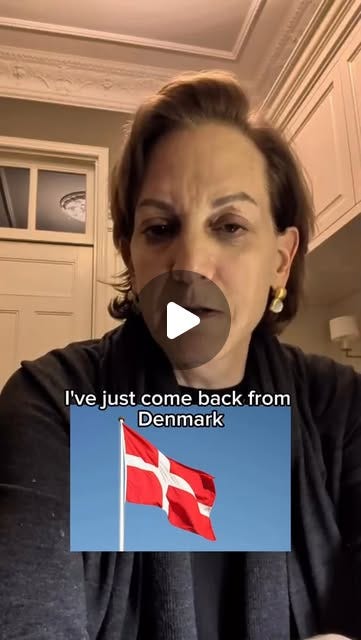
Copenhagen did look beautiful in the snow, and yes people were riding bikes in freezing weather…

The Fifth Year of the War
Instead of adding to the voluminous commentary on the State of the Union speech, which contained nothing anyone remembered the next day, I would rather focus instead on an important milestone that has just passed: Russia’s full-scale invasion of Ukraine has now entered its fifth year. A war that Putin thought would last three days has lasted for hundreds of days. Instead of capitulating, the Ukrainians reinvented modern warfare and built the world’s most sophisticated drone industry from scratch.
More than a million Russians are dead or critically wounded. Ukrainians right now are holding the frontline, have recently taken back territory and are killing or wounding 30,000 Russian soldiers every month. Their goal is 50,000, so that they can eliminate more people than Putin can recruit. The Russian navy has suffered major losses, and has been pushed out of much of the Black Sea. The Russian economy has been rebuilt as a war economy, to the detriment of ordinary Russians.
On the anniversary, I was asked many times how the war might end. But it’s important to remember why the war continues: Because Putin still believes he can win. For him, “winning” still means the destruction of the Ukrainian state, the removal of its sovereignty, probably the removal of its current leaders.
The war also continues because the Trump administration has given Putin reason to believe that he might win. In 2025, the US stopped sending weapons and funding to Ukraine. Although few believed it was possible, Ukraine now receives 99% of its support from Europe. More importantly, the US has begun negotiating business deals directly with Russia. The Wall Street Journal’s expose, published in November, remains the best account. Friends of Putin, the WSJ noted, have been closely involved:
…sanctioned billionaires from his St. Petersburg hometown—Gennady Timchenko, Yuri Kovalchuk and the Rotenberg brothers, Boris and Arkady—have sent representatives to quietly meet American companies to explore rare-earth mining and energy deals, according to people familiar with the meetings and European security officials. That includes reviving the giant Nord Stream pipeline, sabotaged by Ukrainian tactical divers, and under European Union sanctions.
A question for history will be whether Putin entertained this approach in the interest of ending the war, or as a ploy to pacify the U.S. while prolonging a conflict he believes is his place in history to slowly, ineluctably win.
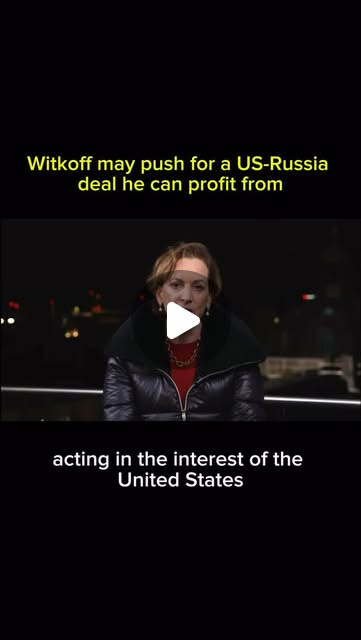
This privatization of American foreign policy is unprecedented. We don’t know who the beneficiaries will be. Perhaps Trump’s family or friends, perhaps Witkoff’s family or friends, perhaps donors of the president. Neither Americans, or Europeans, or Ukrainians are the beneficiaries of this policy, which is contributing to Putin’s decision to keep fighting. His goal, again, remains the conquest of Ukraine, and the division of America from Europe.
From a conversation with Fareed Zakaria in Munich:
Kleptocracy Tracker
Continuing to monitor conflicts of interest, ostentatious emoluments, outright corruption and policy changes that will facilitate outright corruption. (Read my original article, Kleptocracy Inc and check out the SNF Agora Institute chart)
February 13
Trump pardoned five former NFL players for crimes including drug trafficking—another selective use of the pardon power benefiting individuals the president favors.
The Trump administration redirected $15 million in funds appropriated by Congress for USAID to finance a US Marshals security detail for OMB Director Russ Vought.
Tech leaders, including Trump ally Marc Andreessen, have poured $50 million into a super PAC supporting AI-friendly candidates in this year’s midterm elections.
February 17
The CEOs of Goldman Sachs and Nasdaq are among the Wall Street executives headlining the World Liberty Financial cryptocurrency forum hosted by Eric Trump and Donald Trump Jr. at Mar-a-Lago.
The Department of Justice plans to block Netflix’s acquisition of Warner Bros. Discovery on antitrust grounds, potentially clearing the way for Trump-aligned Paramount to purchase the parent company of CNN and HBO.
February 18
Occupational Safety and Health Administration worksite inspections decreased by 20 percent over a six-month period last year, suggesting the Trump administration is relaxing corporate oversight at the expense of worker safety.
Commodity Futures Trading Commission Chairman Michael Selig, the nation’s top federal regulator of prediction markets, forcefully endorsed the gambling platform that allows users to bet on events—including political outcomes the president directly influences.
February 19
The Commission of Fine Arts—now filled with Trump allies—approved his $400 million ballroom, bypassing the normal review process and fast-tracking the project.
Trump announced that the United States would contribute $10 billion to his Board of Peace—an organization that is not controlled by the US government, but rather by himself in a personal capacity—at the organization’s inaugural event.
As the Florida state legislature moves to rename Palm Beach International Airport after the president, the Trump Organization has filed a trademark application for use of his name in connection with the airport, potentially enabling the company to collect royalties from the state.
World Liberty Financial announced plans to tokenize loan revenue interest from the new Trump resort in the Maldives, converting the asset into a blockchain-based crypto token that can be easily traded.
Cantor Fitzgerald—the investment firm founded by Commerce Secretary Howard Lutnick and now run by his sons—stands to reap windfall profits from purchasing the rights to hundreds of millions of dollars in tariff refunds now that the Supreme Court struck them down.
February 20
Changpeng Zhao (CZ), the pardoned founder of Binance, made his first trip to the United States since his release from federal prison to attend the cryptocurrency conference at Mar-a-Lago, following his efforts to promote World Liberty Financial.
Less than a month before meeting with Lutnick to lobby against the opening of a new bridge connecting Canada to Michigan, the billionaire owner of a competing bridge donated $1 million to the MAGA Inc. super PAC.
February 23
FBI Director Kash Patel used the bureau’s business jet to travel to the Winter Olympics in Italy and partied with the US men’s hockey team, amid scrutiny over his prior use of government aircraft for personal travel.
Trump’s Board of Peace proposed launching a US dollar-backed stablecoin—similar to the token issued by World Liberty Financial—as the currency for Gaza’s postwar economy.
The Trump Organization is set to develop a $1.1 billion, 91-story luxury skyscraper in Queensland, Australia.
February 24
The Trump administration warned Ukraine against striking targets in Russia that could harm US economic interests after a Ukrainian drone strike damaged a Russian terminal partly owned by American oil companies, while remaining largely silent about Russian strikes on American-owned assets in Ukraine.
Trump visited his properties 198 times during the first year of his second term, hosting events, fundraisers, and official visits at which foreign officials, cabinet members, political groups, and special interests spent heavily at his resorts.
Louisiana in Denmark
The Louisiana Museum of Modern Art was built outside of Copenhagen around an old manor house originally named after its owner’s three wives, all called Louise. Built in the 1950s and expanded since then, the museum boasts an unusual collection in a beautiful place. They frequently rotate exhibits and also organize evening talks and concerts. I did a fantastic event there, a conversation with Marc-Christoph Wagner, a German who lives in Denmark and has an unusual perspective on Europe and the world.
The sculpture garden, overlooking the sea, is alone worth the trip.


