
Moscow is Burning
Also: Summer Books

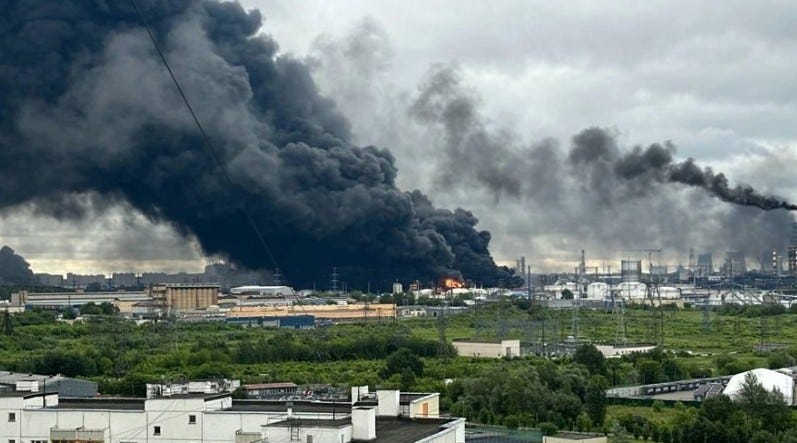
Last September, I spent some time in Kyiv talking to people who were building and testing long-range drones. This week, we saw the result: Multiple attacks on a Moscow refinery, producing billowing clouds of black smoke and oil residue that could be seen and felt all over the city.
It’s not that often that I can point to an article I wrote nine months earlier as the explanation for something that is happening today. But this is one of those times. In September, a Ukrainian officer told me that Kyiv realized early in the war that the Russians don’t care about the deaths of their soldiers:
“Russia can sustain extremely high levels of casualties and losses in human lives. They don’t care about people’s lives.” However, “it is painful for them to lose money.” They need money to fund their oligarchy, as well as to bribe their soldiers to fight: “So naturally, we need to reduce the amount of money available for them.” Oil and oil products provide the majority of Russia’s state income. This is how the oil industry became the Ukrainians’ most important target.
The long-range drone industry also began at the beginning of the war.
After the Ukrainians received some American drones under the aegis of a program called Phoenix Ghost, their efforts became more serious. Made for different kinds of wars, the American drones were susceptible to Russian jamming, and the U.S. imposed restrictions on their use. One former soldier now involved in drone manufacturing told me that the Ukrainians weren’t necessarily prepared to use them either. He and some colleagues found boxes of drones in a warehouse along with some other U.S. equipment in the first year of the war, and figured out how to use them from videos they found on the internet. Only later did they receive real instruction.
Whatever their faults, these American donations did inspire the creation of long-range-drone units. Some are part of the military; others are connected to Ukrainian intelligence. As they grew to understand the technology, the commanders of these units, just like the teams deploying battlefield drones and sea drones, concluded that they needed their own drones, as well as their own drone research and development, with a constant feedback loop between the operators on the front lines and the industrial engineers. As the officer told me, “Everything interesting started a year ago, when the Armed Forces of Ukraine started to receive mass numbers of Ukrainian-made drones.” Once their own production lines were in place, they were not trapped by technology invented somewhere else, and they could continually update it to counter advances in Russian tactics and electronic-warfare technology: “What we had two years ago or a year ago,” the officer said, “it’s dramatically different from what we are operating right now.”
Read the whole thing here: Ukraine’s Plan to Starve the Russian War Machine
The Versailles Treaty
I don’t know whose idea it was to get Donald Trump to sign an MOU with Iran in Versailles. Perhaps President Macron? It’s a bad omen, and the deal is bad too. I will write about Iran in due course, but in the meantime, here are the analyses that I found most useful: Graeme Wood, Iran Has Humiliated Trump. Timothy Snyder, Capitulation Day. Daniel Shapiro, What Did You Expect?
The Firehose of Falsehoods
Last week I talked to Tim Miller of the Bulwark. We were speaking a few days before the details of the Iran treaty were known. But I think the central analysis still holds: if you flood people with contradictory stories to confuse and exhaust them they will tune out, and that’s what Trump tried to do with Iran. He couldn’t solve the problem, so he tried to obfuscate, even make people not care about it. We also talked about Russia and Ukraine, the cruelty of refusing entry to a Somali World Cup referee, Kari Lake and more:
Kleptocracy Tracker
Continuing to monitor conflicts of interest, ostentatious emoluments, outright corruption and policy changes that will facilitate outright corruption. (Read my original article, Kleptocracy Inc and check out the SNF Agora Institute chart)
June 5
Despite pushback from the judiciary and some congressional Republicans over Trump’s $1.8 billion slush fund, the immunity from the IRS that acting Attorney General Todd Blanche ordered for the president and his family members—part of the same settlement—remains.
June 6
Trump pardoned former Indiana Republican Congressman Stephen Buyer for his insider trading conviction after receiving letters from current and former congressional Republicans requesting clemency on his behalf.
June 8
Trump told the Supreme Court that he intends to ask the justices to revive his $475 million defamation suit against CNN—another attempt to shake down a news media organization and one that might succeed after Paramount Skydance, owned by Trump ally David Ellison, completes its acquisition of CNN’s parent company.
Indian billionaire Mukesh Ambani’s Reliance Industries invested at least $100 million in America First Refining—a Texas startup backed by Donald Trump Jr.—before receiving the policy concessions it had lobbied the Trump administration for.
Trump administration officials shut down a Justice Department investigation into Republican Senator Jim Justice’s coal companies for alleged criminal violations of the Clean Water Act.
The Trump administration has been using what remains of the Consumer Financial Protection Bureau to investigate small, mostly nonprofit lenders that Office of Management and Budget Director Russ Vought has deemed too liberal.
June 9
Corporate donors to Trump’s White House ballroom project—including Lockheed Martin, Amazon, Palantir, and Google—have received more than $50 billion in government contracts since construction began.
The Trump Organization licensed the president’s name and likeness to the UFC to sell commemorative silver and gold coins bearing his image, as a promotion for the White House lawn fight on June 14.
More than one million investors in the Trump family’s various crypto ventures had net losses exceeding $2.3 billion as of last April.
June 10
The White House UFC fight celebrating Trump’s birthday cost taxpayers at least $60 million, requiring extensive staff hours across more than seven federal agencies to stage.
June 11
Despite acting Attorney General Blanche’s insistence that the Department of Justice is not moving forward with Trump’s $1.8 billion anti-weaponization slush fund, administration officials have assured allies that some form of payout will still go ahead.
June 14
One of Trump’s brokerage accounts bought between $15,000 and $50,000 worth of shares in TKO Group—the UFC’s parent company—in March, positioning him to profit from the White House–hosted fight.
June 16
The Department of Justice sought to intervene in support of Elon Musk’s xAI in an NAACP lawsuit accusing the company of failing to obtain proper permits for the power plant servicing its $20 billion data center in Mississippi.
The cost of Trump’s ballroom has ballooned to $600 million, half of which will be paid by taxpayers despite initial White House assurances that the project would be funded solely through private donations.
FBI Director Kash Patel has used bureau funds to reward MAGA loyalists beyond their salary caps, to the tune of tens of thousands of dollars each.
World Liberty Financial will likely soon be approved for a national bank trust charter, which would allow it to independently issue its stablecoin directly to American consumers, avoid liquidity requirements, and settle financial transactions—all of which the Trump family could profit from.
June 18
The Trump administration awarded a $1.7 million no-bid contract to a business tied to a longtime supporter of the president to clean the Reflecting Pool (which has ended in disaster)
Summer Books
I am always trying to find books, including fiction and history, that help me understand the current moment. In no particular order, these are a few books that do.

The Emergency, by George Packer. Packer conjures up a fantasy society which has experienced a shocking change of regime. The reverberation affects the private lives of all of the characters, who have to adjust. The details are just close enough to our world to hit home. Available for purchase here.

The Times of Cherries, Montserrat Roig. This is a novel set in Barcelona in the 1970s, at the very end of the Franco era. It’s a Catalan classic, republished with an introduction by Colm Toibin. The topic is the same as Packer’s novel: How politics reshapes private lives. Available for purchase here.
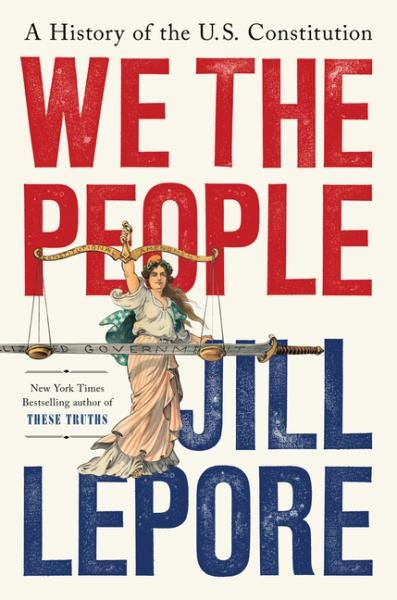
We the People, Jill Lepore. This is a history of the constitution, not just as it was first written by the founders, but how it was changed, and not changed, over the subsequent centuries. Like all of Lepore’s books, it is full of quirky stories that illuminate bigger issues. It just won the Pulitzer Prize for history. Available for purchase here.
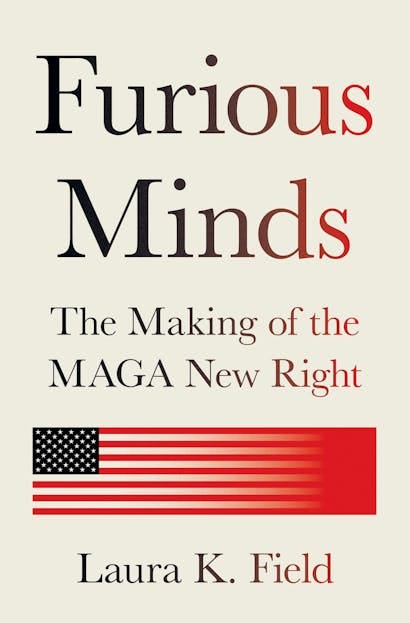
Furious Minds, Laura Field. This is the definitive account of the academic and philosophical origins of the American far-right, by someone who knew many of the protagonists. If you still can’t understand how America developed an illiberal, anti-democratic political movement, this helps to explain. Available for purchase here.
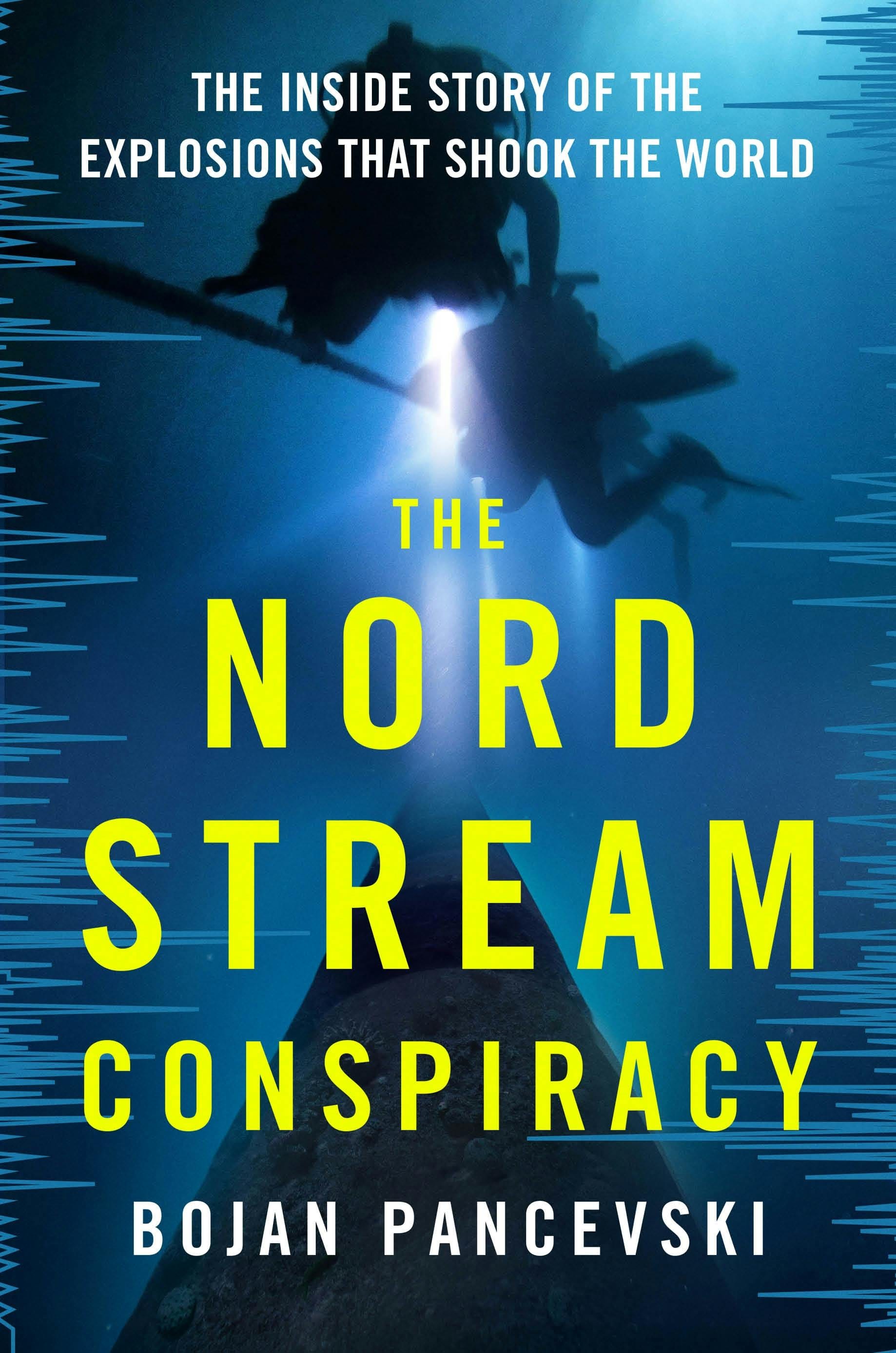
The Nord Stream Conspiracy, Bojan Pancevski. I can’t vouch for every word in this book, but it was best-seller in Germany for a reason: Pancevski has spoken to all of the members of the Ukrainian team who exploded the Nordstream pipeline, as well as the German investigators. Available for purchase here.
The Ukrainian officer gave us the clearest strategic insight of this war: attack the money, not the morale.
Russians absorb casualties the way authoritarian systems always do, by insulating the people who make decisions from the people who die. But revenue is different. Revenue reaches the oligarchs. Revenue funds the bribes that keep soldiers fighting and elites loyal. Cut the revenue and you cut the system at its actual load-bearing point. The Moscow refinery smoke is not symbolism. It is the physical result of a targeting doctrine built on an accurate model of how the regime actually works.
The Iran outcome is the same lesson running in reverse. A side that never developed a theory of what violence would change discovered, predictably, that it changed nothing. The Strait closed. The second move did not exist. And so the capitulation was dressed as victory and signed in a palace, because there was nothing else left to do.
One campaign was designed around the adversary's real incentive structure. The other was designed around the fantasy of what sufficient force would psychologically produce.
That asymmetry is the strategic story of this era. The people who win are the ones who model their adversaries as systems with specific pain thresholds, not as audiences waiting to be impressed.
Johan
I was on the train from Chopin Airport to Warszawa Centralna on Thursday and was discussing the way the war was changing in Ukraine when a young man from Ukraine enter the discourse extremely happy to show me the video of this explosion in Moscow. What a magnificent site it is to see Ukraine penetrating deep into Russian territory and striking at the heart of Moscow. Despite the excuses Putin offers along with his many western sycophants, this war is nothing more than Oligarchs and Putin protecting their wealth and power as democracy began to get too close to their western border. You can have Uncle Olek on one side of the border beginning to show Uncle Vlad on the other how much his life is improving whilst Vlad's life stays the same or worsens.
As for Iran, the details of the capitulation smell of an oncoming revelation that he has thrown the USA under the bus, as well as Israel, so that he and his family will be found to somehow benefit from the deal. I noticed the ever sycophantish Niall Ferguson discussed "US investment" in Iran as part of the surrender document. I'll be keen to hear your thoughts next time Anne :-) Be well.