
One-Eyed Monsters
Why we watch them together
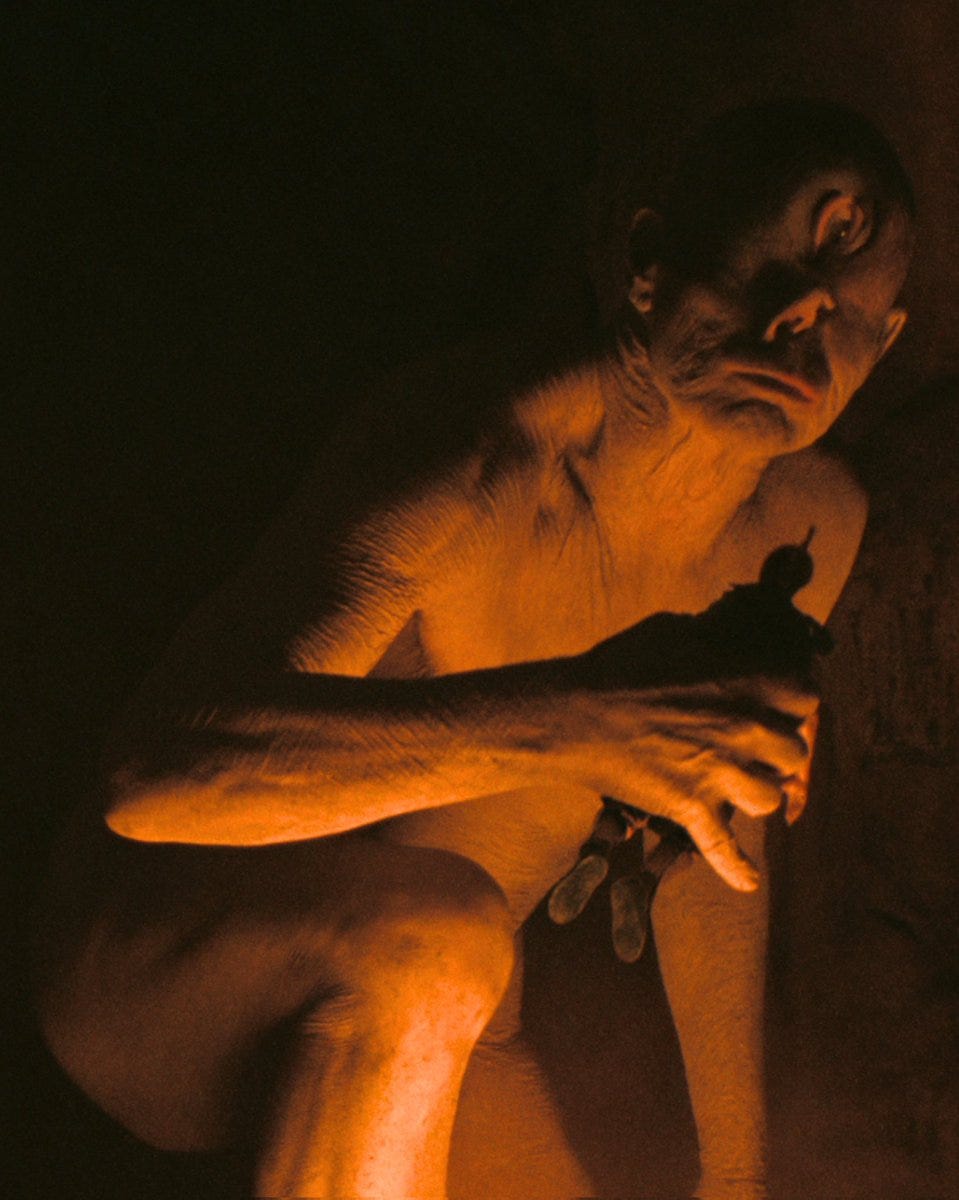
Along with maybe 1.5 million people, I saw The Odyssey on its opening weekend (Sunday night, late show, Warsaw IMAX). A few days earlier, along with maybe 1.5 billion people, I also watched Spain win the World Cup. Apart from their other attributes, both summer spectacles were satisfying in this sense: they made it possible, however briefly, to be part of a global conversation, or at least a very large one
Normally, that doesn’t happen. Human beings have always been divided by language, culture, and geography. Nowadays even people who live in the same country, share the same culture and speak the same language are divided just as profoundly by politics, and by algorithms designed to make them dislike compatriots who identify as something different from themselves. “Globalism” is used by some people as a slur, “globalization” is yesterday’s idea and references to any kind of global community are cringe.
Nevertheless, human beings do go on trying to produce events that the globe will find meaningful. Before the World Cup begins there are always opening ceremonies, designed to do exactly that. Sixteen years ago Shakira, who is Colombian, sang “Waka Waka (This time for Africa)” at the opening of the South African World Cup; the video now has 4.6 billion views. For this year’s tournament she performed another song, Dai Dai; so far, that one has more than 500 million views. Both videos feature people with different accents, skin color and clothing. This was not “DEI” or “diversity”, but rather an accurate reflection of the people playing on the field as well as those watching at home.
People watched the videos, and, more importantly, the matches, precisely because they knew that people of many languages and races were involved, and because they want to feel part of the same event. Most of them weren’t looking for a reflection of themselves on the field, or confirmation of the superiority of their own identity. They just wanted to take part in a global contest and find out which humans, of whatever type, are the best players of the world’s most popular sport. Then they want to argue about which players are best, what mistakes were made, what could have happened if something were different. Everyone is included, no matter who they are, and that is part of the appeal. A week or two after the final, I was in a Polish gas station where they were already selling a series of children’s comics featuring English, Norwegian, French and Brazilian soccer stars, because Polish children are presumed to want to join the global conversation too.
Nolan’s Odyssey is of course a totally different phenomenon, but it has also succeeded in getting many people talking about the same thing all at once. I’ve spent some of the past week reading the reactions and, since everyone is allowed to contribute to this global conversation too, here are mine. I thought the right-wing criticism of the film for using actors of an incorrect identity was ludicrous. In a modern American rendering of any classic, whether Hamlet or Homer, of course the characters can look like Americans and sound like Americans, and Americans have different skin colors. In Ulysses, James Joyce’s reworking of The Odyssey, the characters are all Irish, but that doesn’t make the book “woke.”
But I also enjoyed reading the contrarian takes of the classics scholars, several of whom pointed out the wide gaps between the original epic poem and the film. Daniel Mendelsohn, one of the Odyssey’s great modern translators, found Nolan’s Odysseus to be more Christian than Homeric, riddled with guilt and strangely reminiscent of the director’s other protagonists: “Nolan has merely remade Homer’s hero in his own image.” Emily Wilson, whose own pathbreaking Odyssey translation has been cited by Nolan as an inspiration, actively disliked the film. Matt Damon’s Odysseus, she writes, “isn’t complicated or wily or artful.” He “remains miserable as he hikes doggedly towards the camera across yet another beautiful landscape.”
Unburdened by deep knowledge of the original, I enjoyed the film enormously, found many universal themes and can absolutely understand why the rest of planet will want to watch it. The characters know it is impossible to defy the gods and change their fate, but they keep trying anyway. Odysseus is haunted by the knowledge that he has broken the iron rules of his civilization, and fears that is why it is crashing down around him. Penelope struggles with doubts about her husband’s return, but is trying nevertheless to remain faithful. Telemachus acquires courage even as he is surrounded by violence and venality. The Cyclops is not merely silent and ugly, but also capable of inflicting casual, amoral, thoughtless pain on Odysseus’s men, making him exactly the kind of devil a global audience fears most.
Some of the other adventures dragged on, but I loved the final third of the movie, when Odysseus comes home in disguise and gradually reveals his identity. His conversation with Anne Hathaway’s Penelope was the best scene in the movie. They are sitting on different sides of a screen, and can speak but not see one another. Slowly, her tone changes as she realizes that she is finally talking to someone with deep knowledge of her husband, who might after all be alive. She even half-realizes that this might be him. His tone changes too, as he recognizes and absorbs the depth of her loyalty after so many years.
I read The Odyssey in college, but have just bought Wilson’s translation in order to read it again. That also makes me part of a very large crowd, which I don’t mind at all.
Kleptocracy Tracker
Continuing to monitor conflicts of interest, ostentatious emoluments, outright corruption and policy changes that will facilitate outright corruption. (Read my original article, Kleptocracy Inc and check out the SNF Agora Institute chart)
July 10
The Trump administration eased export restrictions on the UAE—allowing the country to buy a range of advanced AI chips the US had previously barred it from purchasing over concerns the chips could be acquired by China. This concession represents a conflict of interest, since it follows the Emirati royal family’s purchase of a 49% stake in World Liberty Financial, Trump’s crypto-currency firm.
July 13
Donald Trump Jr. and Eric Trump have amassed an investment portfolio of more than a dozen defense tech startups—mostly acquired during the president’s second term—that have collectively generated more than $3.2 billion in direct government revenue since the brothers invested, with an additional $3.1 billion in future contract options.
Trump has invoked Lindsey Graham’s death to push for passage of an industry-friendly cryptocurrency bill, claiming the late senator supported the legislation despite his not having been a co-sponsor.
July 14
Base Group, the parent company of a South Korean aluminum firm under investigation by the Department of Commerce, made a $2 million payment to one of Trump’s holding companies last year.
July 15
Trump and groups linked to the president have received more than $780 million in donations for his personal and political projects since the 2024 general election—largely from companies pursuing government contracts or favorable policies.
After multiple attempts to get his face on US currency, the Department of the Treasury will begin minting one-dollar coins featuring Trump’s portrait to commemorate the country’s 250th anniversary.
July 16
Kenneth Kies—an assistant Treasury Department secretary and acting IRS chief counsel—was ousted from his position after he warned that the White House risked violating a federal law prohibiting senior officials from involvement in IRS audits.
Trump has promoted more than 20 companies on Truth Social within days of buying their stock.
Kleptocracy Tracker Extra
I am singling this story out because I can’t think of any similar incident, anywhere.
Trump Media & Technology Group, the parent company of Truth Social, has announced the launch of a new data feed called Truth API, which will give paid subscribers priority access to the president’s posts—posts where he has often first announced market-moving policy decisions. Truth Social is one of Trump’s preferred channels for breaking news: it’s where he first formally announced the start of the US-Iran war, and where he regularly plugs favored stocks (see above). In theory, early access to these posts could give investors an edge, letting them trade ahead of the broader market.
In practice, any investor with enough capital to move markets will simply pay for the subscription, erasing the supposed advantage for everyone else. The result is less a trading edge than a paywall—another way for the Trump family to monetize the presidency. At the same time, allies of the president will continue receiving advance notice of tariffs, war-related decisions, and other market-moving policy through informal channels, no subscription required. This is a president who feels his first responsibility is to his patrons, not the American public.
Lubostroń
A few weeks ago I posted some pictures from a book festival in the Veneto. During that same trip, we visited the Villa Rotonda, designed in 1565 by Andrea Palladio and finished some years later. With four identical, symmetrical facades and an elegant dome, Palladio’s villa seems so balanced and so perfect that it has been copied many times. Most Americans are familar with one of the most famous copies, Monticello.
This weekend we went to visit Lubostroń, in northwest Poland, another building inspired by Palladio’s villa. The palace was constructed in 1795-1800, just a few years after the old Polish Commonwealth had been partitioned by Russia, Prussia and Austria and erased from the map. The aristocrat who commissioned it, Fryderyk Skórzewski, wanted the palace to stand as a monument to Poland. The interior is decorated with Polish symbols and historic scenes. Atlas holds up the world on the top.
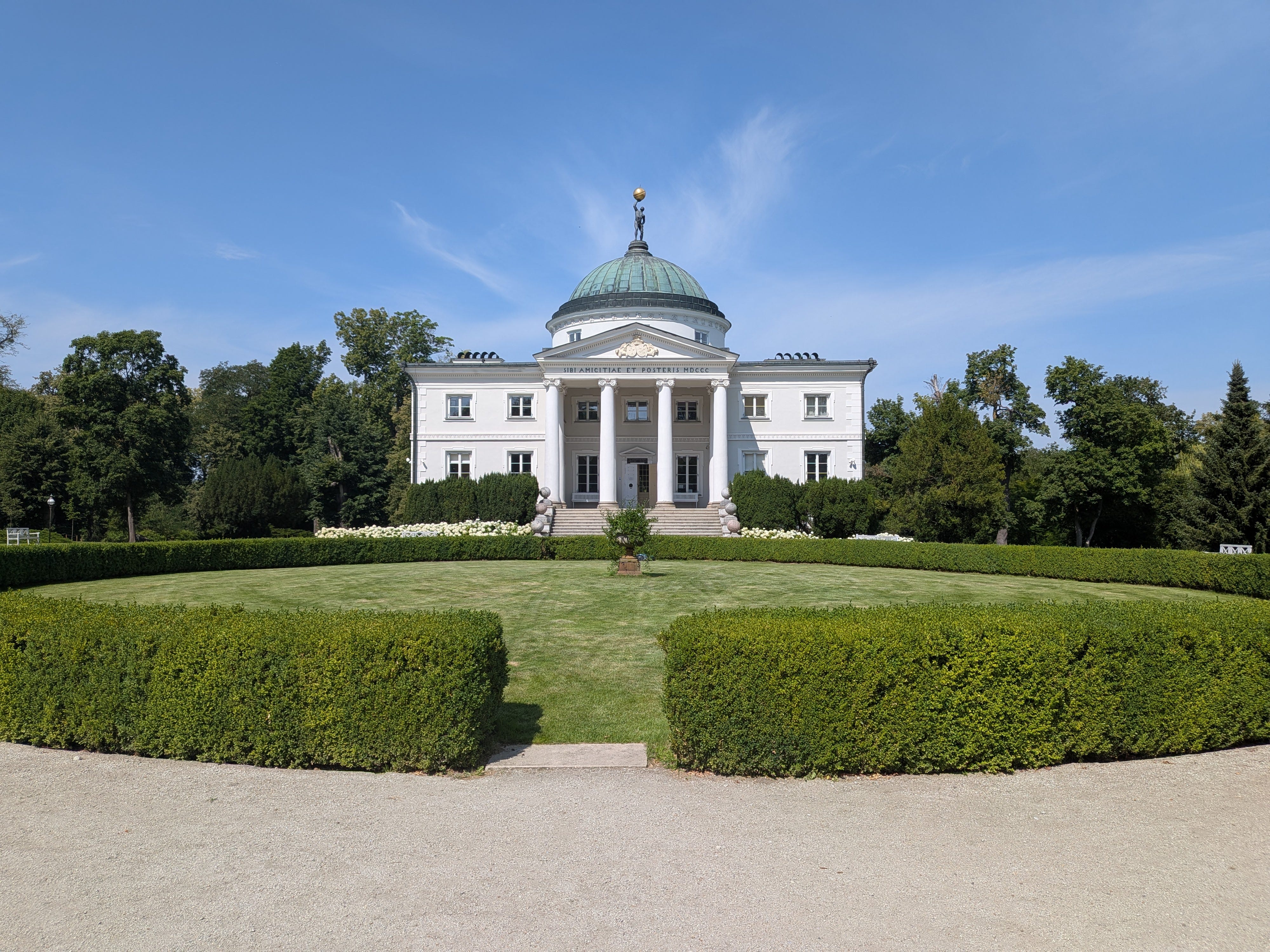
The gardens lost some trees in a hurricane a few years ago, but somehow look better than ever.


I am at work on a longer article, and have been posting a bit less as a result. I hope you will all get to read it, in due course. In the meantime, enjoy your summer...
You put your finger on why the World Cup works and called it inclusion, but there's a harder mechanism underneath it. The pitch is the cleanest case of a single principle: presence is the only claim that counts.
Nobody on that field is there by blood, or by ancestry, or by who arrived first. You're the best player right now or you aren't. Being here now is the whole argument…and everyone gets to watch it adjudicated in real time, which is exactly why everyone watches.
That's also why the Cyclops is the right monster. One eye is the tribal eye; it can only see confirmation of itself. Two eyes take in the whole field—-every accent, every color, the best of whatever type. The fans who want a mirror on the pitch and the critics who want actors of the "correct" identity are making the same mistake from opposite ends: they've traded the conversation for the reflection.
And the joinable thing is the human thing. Polish kids buying comics about Norwegian strikers, half the planet buying the Odyssey to argue about it, that's culture doing the one thing culture is for, which is staying open to anyone who shows up.
The monster's whole project is to close it.
Really interesting and made me think, thank you.
Johan 🐌
Thank you, Ms. Applebaum.